
Questions
When to Take Your Cat to the Vet for Limping: A Guide
Take your cat to the vet if limping lasts more than 24 hours, if they can't bear weight, if there's an open wound or swelling, or if they show signs of pain. For emergencies like a dangling limb or excessive bleeding, seek immediate care.
How long should you wait before taking a limping cat to the vet?
A good fit if…
- Mild limp with no other symptoms: You can monitor for up to 24 hours. Rest your cat in a confined space and check for improvement.
- Limp improves within 24 hours: If your cat is walking normally and shows no pain, it may have been a minor strain.
Consider another option if…
- Limp lasts more than 24 hours: Even a mild limp that doesn't resolve needs a vet exam to rule out underlying issues.
- Cat can't bear weight: If your cat holds the leg up completely, don't wait—schedule an appointment right away.
- Other signs appear: Swelling, crying, or behavior changes mean you should not delay.
Our team at Cats Only Clinic in Rocklin recommends erring on the side of caution. If you're unsure, call us at (916) 435-9300—we'll help you decide. We accept walk-ins and offer Saturday hours for your convenience.
Why is my cat limping? Common causes and what they mean
| Cause | What it looks like | Typical recovery |
|---|---|---|
| Sprain or strain | Mild limp, may improve with rest; cat may still jump or run | Days to weeks with rest; vet may recommend anti-inflammatories |
| Fracture or break | Severe limp, unable to bear weight, obvious swelling or deformity | Weeks to months; requires x-ray and possible surgery |
| Open wound or cut | Visible blood, laceration, or puncture; cat may lick the area | Days with cleaning and antibiotics; may need stitches |
| Foreign object | Limping with paw licking; may see a thorn, glass, or burr | Immediate removal; minor wound care |
| Infection or abscess | Swelling, heat, pus, or foul odor; cat may be lethargic | Requires vet drainage and antibiotics; recovery in days |
| Arthritis | Gradual onset, stiffness, especially after rest; common in older cats | Ongoing management with pain relief and supplements |
If your cat is limping but still jumping and running, it could be a mild sprain—but monitor closely. A cat suddenly limping on a back leg may indicate a fracture or dislocation. Our diagnostic tools, including x-rays, help pinpoint the cause quickly.
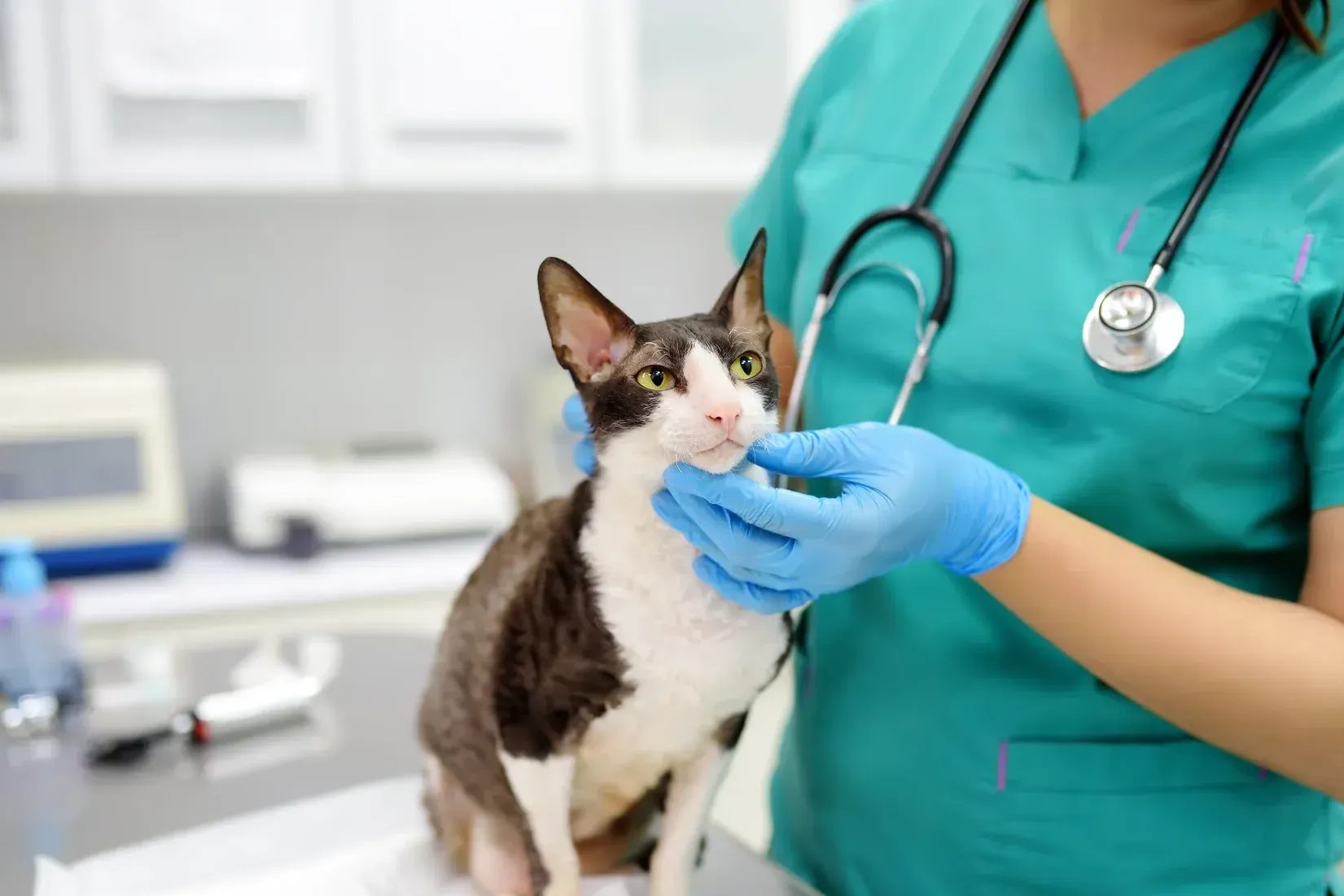

When to take your cat to the vet for limping: red flags
Some situations require immediate veterinary emergency clinic attention. If your cat shows any of these signs, don't wait—bring them in or go to an emergency vet right away.
- Completely unable to bear weight: If your cat holds the leg up and won't put any pressure on it, this suggests a fracture or serious injury.
- Cries out in pain: Vocalizing when moving or being touched indicates significant pain.
- Obvious swelling or deformity: A bent or swollen limb is a red flag for a break.
- An open wound or excessive bleeding: Visible cuts, punctures, or blood require immediate care to prevent infection.
- Limping after a trauma: If your cat fell, was hit by a car, or had a fight, seek urgent evaluation.
- Lethargy or not eating: Combined with limping, this signals a systemic issue.
For non-emergency limping, call us at (916) 435-9300 to schedule an appointment. We're open Monday through Saturday and serve Rocklin, Roseville, and nearby areas.
How to tell if your cat is in pain: subtle signs of limping and suffering
Cats are masters at hiding pain. Even if your cat is limping but not crying or acting normal, they may still be suffering. Look for these subtle signs:
- Hiding or withdrawing: A painful cat often seeks solitude, hiding under furniture or in closets.
- Reduced appetite: Pain can cause a cat to eat less or stop eating entirely.
- Changes in grooming: A cat in pain may over-groom the sore area or stop grooming altogether, leading to a messy coat.
- Behavior changes: Irritability, hissing when touched, or avoiding interaction can indicate discomfort.
- Altered posture: A hunched back, tucked tail, or stiff gait are common pain indicators.
If you notice any of these alongside a limp, it's time for a pain assessment by a vet. We can help determine the cause and provide relief.
Directions to our cat veterinarian near me from Rocklin High School
Start at Rocklin High School and head to Cats Only Clinic at 1220 Sunset Blvd, Rocklin, CA 95765.
Emergency vet vs. regular appointment: where to take your limping cat
A good fit for our clinic if…
- Limp is mild and cat is stable: Your cat is eating, drinking, and acting mostly normal.
- During our hours: We're open Mon 8:30 AM–6 PM, Tue 8 AM–6 PM, Wed–Fri 7:30 AM–6 PM, Sat 8:30 AM–1 PM. We accept walk-ins and same-day appointments.
- You want a cat-only environment: Our clinic reduces stress for your feline friend.
Consider an emergency vet if…
- It's after hours or Sunday: We're closed Sundays. For urgent issues, go to a 24-hour emergency vet.
- Signs of emergency: Dangling limb, heavy bleeding, or severe pain require immediate ER care.
Call us at (916) 435-9300 if you're unsure. We're located at 1220 Sunset Blvd, Rocklin, CA 95765, near Jessup University and Rocklin High School. We serve Rocklin, Roseville, Lincoln, and surrounding communities.
What to expect at the vet for a limping cat: exam, treatment, and cost
| Factor | Why it matters | Typical range |
|---|---|---|
| Office exam | Includes physical exam, pain assessment, and history | Varies; ask for a quote |
| X-rays | Needed to diagnose fractures, dislocations, or arthritis | Varies; depends on number of views |
| Medication | Pain relievers, anti-inflammatories, or antibiotics | Varies by medication and duration |
| Wound care | Cleaning, bandaging, or stitches for cuts | Varies; ask for an estimate |
| Surgery | For fractures or severe injuries | Varies significantly; we provide a detailed quote |
We accept cash, major credit/debit cards, and CareCredit. New clients receive a free first exam (terms apply). For a personalized cost estimate, call us at (916) 435-9300. We're transparent about pricing and will discuss all options with you.
First aid for a limping cat: what to do before you call the vet
- Stay calm and assess: Approach your cat gently. Look for obvious injuries like bleeding, swelling, or a foreign object stuck in the paw.
- Confine your cat: Place them in a small, quiet room or a carrier to prevent further movement. Rest is key for a sprain or minor injury.
- Check for wounds: If you see a small cut, clean it gently with warm water. Do not apply any ointments or bandages without vet guidance.
- Do not give human pain medication: Never give your cat ibuprofen, acetaminophen, or aspirin—these are toxic to cats. We have safe options.
- Prepare for transport: Use a sturdy cat carrier with a soft blanket. If your cat is in pain, handle them carefully to avoid bites or further injury.
- Call us: Dial (916) 435-9300 to let us know you're coming. We'll prepare for your arrival and give you any additional instructions.
For more on calming your cat before a visit, see our guide on how to calm a cat before a vet visit.
For details on services and visits, see the main page about cat vet near me.
Sources
Frequently asked questions
How to tell if cat limping is serious?
A limp is serious if your cat cannot bear weight, cries out, has obvious swelling or an open wound, or if the limp lasts more than 24 hours. Subtle signs like hiding or not eating also indicate pain. When in doubt, call your vet.
How long will a cat limp with a sprained leg?
A mild sprain may improve within a few days with rest, but if limping continues beyond 24–48 hours, a vet visit is recommended. Without proper diagnosis, a sprain can worsen or mask a more serious injury like a fracture.
Can a cat's limp heal on its own?
Some very mild limps from minor strains may resolve with rest, but it's risky to assume. Many causes—like fractures, infections, or foreign objects—require veterinary treatment. If the limp doesn't improve within 24 hours, see a vet.
How much does it cost to take a cat to the vet for limping?
Costs vary based on the exam, any needed x-rays, medications, and treatments. We offer a free first exam for new clients (terms apply) and accept CareCredit. Call us for a personalized estimate.
How long should I let my cat limp before the vet?
A general rule is to monitor for up to 24 hours if the limp is mild and your cat is otherwise acting normal. If the limp persists beyond that, or if there are any red flags like swelling or pain, schedule a vet visit sooner.
Also asked as
- When should I take my cat to the vet for limping?
- How long can a cat limp before seeing a vet?
- Is cat limping an emergency?